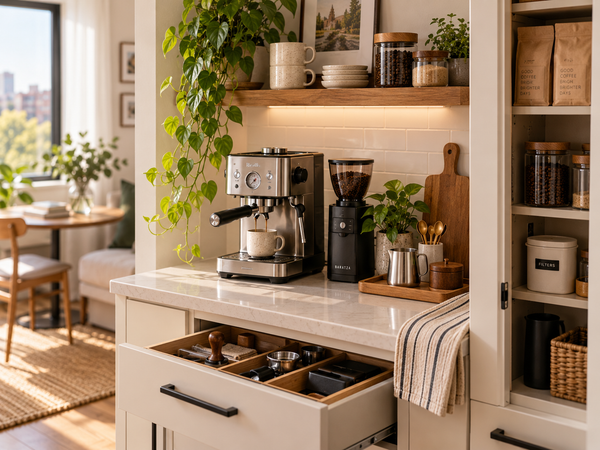
Practical coffee bar ideas for small spaces—how to choose, lay out, and style a functional home café setup without cluttering your kitchen or sacrificing counter space.
Introduction: The Small-Space Home Café Dilemma
For coffee enthusiasts living in apartments or compact homes, creating a dedicated home café presents a unique space-planning challenge. Standard kitchen counter space is often limited, leaving coffee makers, grinders, scales, and beans competing with cutting boards and drying racks.
While generic interior design guides often suggest placing a basic console table in a hallway, setting up a functional coffee station requires more intention. Brewing equipment demands stability to minimize wobbling during grinding and tamping. Daily brewing workflows also require accessible electrical power, convenient water access, clean cable routing, and adequate ventilation to protect surrounding cabinetry.
By taking a specialized home-café perspective, this guide treats furniture as an integral part of your brewing system rather than simple decoration. Whether you are considering a dedicated coffee station cabinet, a flexible rolling cart, or a space-saving coffee bar hutch, this article outlines the practical measurements, layout strategies, and setup considerations needed to build an efficient coffee nook in tight quarters.
Section 1: Measure Your Space Before Choosing Furniture
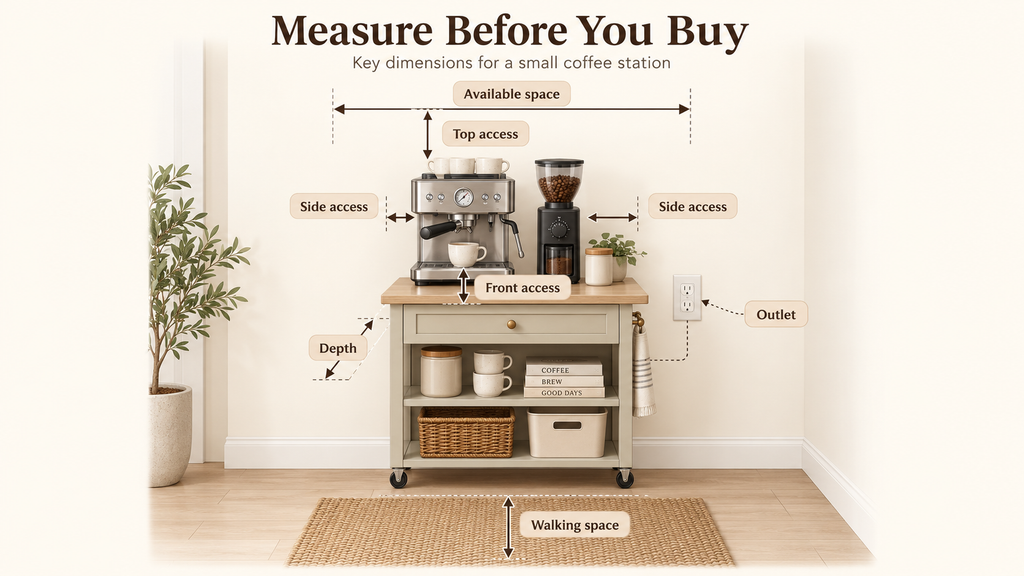
In small-space design, the size of your furniture does not equal the total space needed to use your coffee station. A 30-inch-wide cart or cabinet requires extra room around it for cabinet doors to open, refrigerator doors to swing, or a person to stand comfortably while grinding and tamping.
Before purchasing any coffee bar furniture, measure these six key dimensions:
- Available Space: Measure the exact wall width and floor area where the piece will stand, keeping main walkways clear of obstruction.
- Furniture Depth and Walking Space: Measure the depth of your largest appliance first. While many compact coffee cabinets and carts measure between 15 and 24 inches deep, your specific equipment should determine the depth you need to leave enough walking space in front.
- Space Needed to Use Your Machine: Measure your coffee gear with all doors, lids, and drawers fully open. Machines with top-loading water reservoirs or a bean hopper (the container on top of the grinder that holds whole beans) require significant overhead clearance, while front-loading or side-pull reservoirs need space beside the machine.
- Heat and Ventilation Space: Heat and steam from kettles and espresso machines can damage nearby cabinet finishes over time. Follow the appliance manufacturer’s ventilation requirements and leave enough room around the unit for heat to escape.
- Shelf Height and Reach: Ensure upper shelves or hutch storage sit at a comfortable reach. If mug shelves are placed too high, everyday access becomes awkward.
- Outlet Location and Power: Measure the distance from the furniture to the nearest wall outlet. If selecting furniture with built-in power outlets, check the strip’s maximum power rating before plugging in an electric kettle or espresso machine.
Section 2: Coffee Bar Cabinets & Appliance Garages (Concealed & Semi-Enclosed)
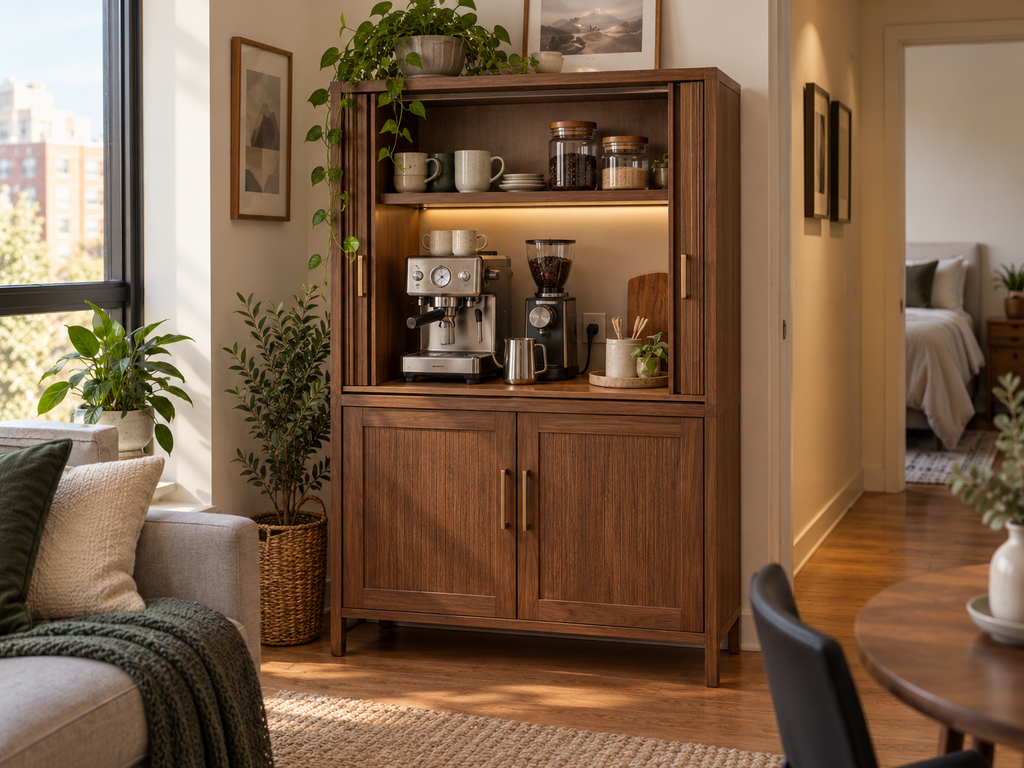
When floor space is limited, a dedicated kitchen coffee bar cabinet or an appliance garage—a cabinet designed to hide countertop appliances when not in use—provides a clean visual outcome by keeping equipment out of sight.
Key Features to Consider
- Access Doors: Pocket or retracting doors are especially useful in tight spaces because they don’t swing outward into walking space while you brew. Glass or solid cabinet doors keep stored mugs and accessories protected from dust.
- Power Management: Internal power outlets or cable openings in the back keep cords hidden behind cabinet panels rather than draped across counters. Always verify that built-in outlets match the power requirements of your equipment.
- Day-to-Night Versatility: Sideboards and cabinets designed for coffee nooks with lower enclosed doors and integrated beverage storage allow a single piece of furniture to function as a morning coffee station and an evening beverage bar.
Operating Considerations
Ensure the interior opening provides sufficient clearance for daily operation. A sturdy pull-out shelf can make refilling easier, but verify that it is rated for your machine’s weight and remains stable when extended.
Section 3: Rolling Coffee Carts & Mobile Islands (Flexibility & Small Footprints)
For renters or homes with shifting layouts, a mobile coffee cart offers flexibility. A cart can be positioned near an outlet during morning brewing and rolled out of the way when entertaining.
Key Structural Requirements
- Frame Stability & Weight Capacity: Coffee grinders and espresso machines create vibration during operation. Look for a sturdy frame—whether constructed from solid wood, wood composite, or reinforced metal—that remains stable under load.
- Locking Wheels: Lightweight plastic wheels can slip or wobble when tamping espresso. Choose sturdy locking wheels that keep the cart from moving while you grind or tamp.
- Utility Storage: Carts with shallow top drawers accommodate small tools like scales, tampers, and spoons, while side towel bars or hooks keep cloths and milk pitchers accessible.
Furniture Styles to Consider
- Solid Wood Kitchen Carts: Look for compact wooden carts with a solid top and a sturdy frame that does not wobble during grinding or tamping.
- Utility Storage Carts: Rolling carts featuring shallow top drawers paired with enclosed lower cabinets provide hidden storage for bean bags and water jugs.
Section 4: Vertical Furniture: Hutches, Baker’s Racks & Wall-Mounted Shelves
When floor square footage is limited, vertical furniture utilizes wall space effectively.
Multi-Tier Baker’s Racks
Multi-shelf tower racks offer extensive organization within a narrow footprint. Look for models featuring side frame S-hooks for hanging mugs and lower wire baskets or shelves for beans and supplies. A wide center counter serves as the main appliance station while upper shelves store drinkware within arm’s reach. If the rack includes an integrated power strip, verify that its power rating is suitable for your espresso machine or kettle.
Coffee Bar Hutches
A traditional or rustic coffee bar hutch provides substantial storage capacity with enclosed lower cabinets and upper display shelves. Store heavier items like extra bean bags and water jugs in the lower cabinet to keep the unit stable.
Section 5: Corner Coffee Bar Cabinets
Unused room corners can be converted into functional beverage stations using a corner cabinet designed for coffee equipment.
Corner cabinets fit flush against intersecting walls, turning awkward dead zones into dedicated work areas. When choosing a corner cabinet:
- Look for models with adjustable or removable middle shelves, which can accommodate a compact beverage fridge.
- Follow the refrigerator manufacturer’s ventilation requirements and leave enough room behind or around the unit for heat to escape.
- Utilize side bottle racks or lower cabinet doors to keep syrup bottles and extra supplies organized.
Section 6: Matching Your Space to the Right Furniture
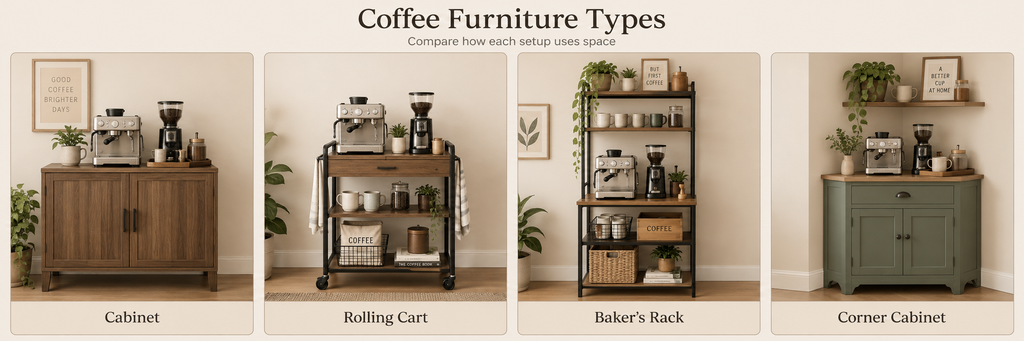
To help you match your available space to the best furniture solution, consider these common layout scenarios:
- Scenario A: Limited Wall Space (24–30 inches): Choose a tall, multi-tier baker’s rack or a narrow rolling cart to maximize vertical storage.
- Scenario B: Unused Room Corner: Install a corner cabinet to create a dedicated station without encroaching on main walking space.
- Scenario C: Rental Apartments: Use a solid wooden rolling cart with sturdy locking wheels that can move with you to future homes.
- Scenario D: Concealed Storage Needs: Select a small coffee bar cabinet or an appliance garage with pocket doors to hide equipment when brewing is complete.
- Scenario E: Full Kitchen Counters: Set up a dedicated sideboard in an adjoining dining nook or living area.
Once you’ve selected your base furniture, see our complete guide on how to design a small-space home café to map your workflow, right-size your gear, and add renter-safe vertical storage.
Section 7: Matching Furniture to Your Brewing Method
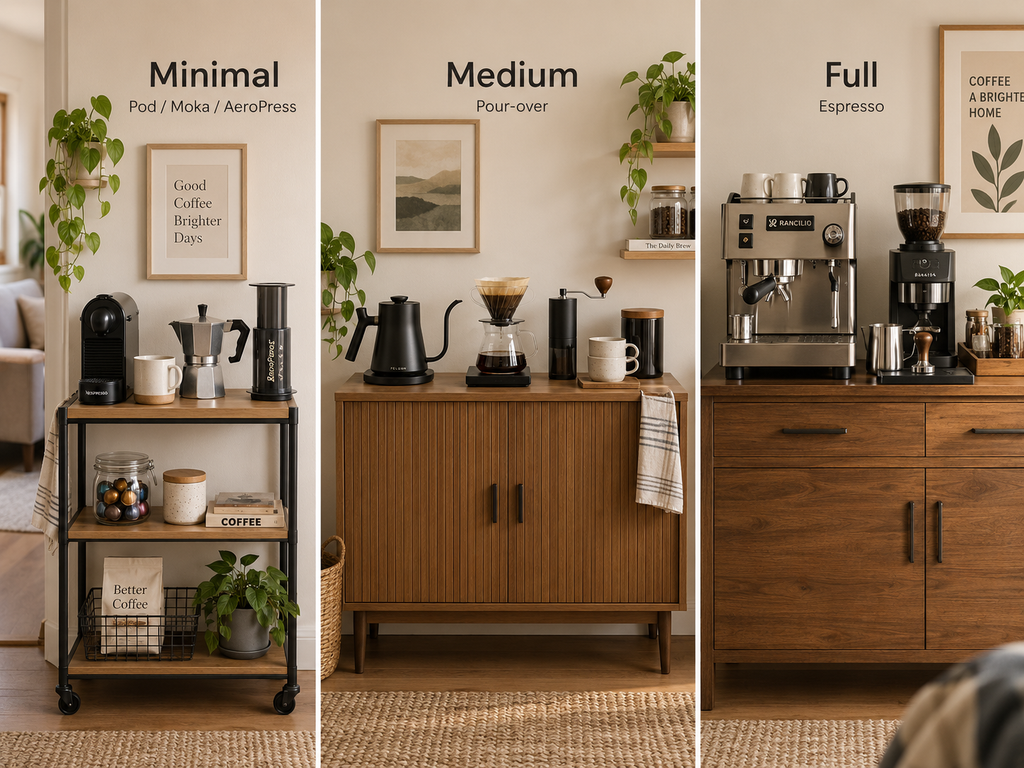
Different coffee brewing methods place distinct demands on furniture dimensions, power access, and storage. Use the table below to align your setup with the appropriate furniture features:
| Brewing Method | Primary Furniture Requirement | Key Storage & Power Needs | Recommended Furniture Type |
|---|---|---|---|
| Pod / Capsule Machine | Requires little counter space | Minimal counter depth; storage drawers for pods and mugs | Shallow console table, narrow cabinet, or wall-anchored floating shelf |
| Pour-Over & Manual Drip | Stable surface for kettle and dripper | Space for gooseneck kettle, scale, manual grinder, and bean canisters | Compact rolling cart or small island |
| Moka Pot & AeroPress | Needs more storage than permanent counter space | Minimal permanent counter space; drawer or shelf storage for the brewer, filters, and accessories | Small sideboard, wall-mounted cabinet, or baker’s rack |
| Espresso Setup | Stable work surface with enough depth for machine and grinder | Nearby outlet suitable for the machine; clearance for water reservoir, grinder, and knock box | Coffee bar cabinet with storage for accessories, sturdy cart, or wide sideboard |
| Super-Automatic Machine | Enough space to open bean and water compartments | Easy overhead or side access for bean hopper lid and water tank | Open-top sideboard or cabinet with sturdy pull-out shelf |
Section 8: Home-Café Workflow & Station Layout
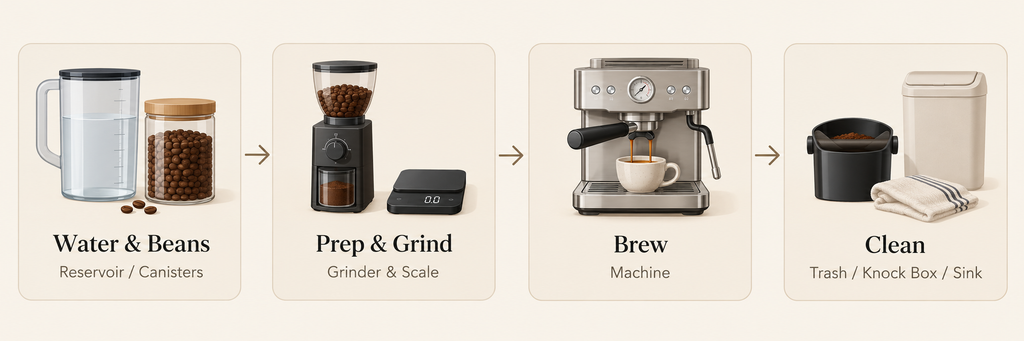
A successful coffee station supports a smooth, logical brewing sequence: Water & Beans → Prep & Grind → Brew → Clean
Arrange the Station for Easy Daily Use
- Keep Waste Nearby: Knocking out used espresso pucks can scatter loose grounds. Position your furniture close to a trash bin or place a knock box (a small container with a padded bar to knock out espresso pucks) directly beside your brewing area to simplify cleanup.
- Sink Access: Locating your station near a kitchen sink makes filling water tanks, rinsing frothing pitchers, and wiping down surfaces easier.
- Cable Management: Route cords through cable openings in the back or rear-mounted power strips to prevent wires from crossing work surfaces.
For a step-by-step breakdown on zone dimensions and station ergonomics, check out our master methodology for setting up a small-space coffee corner .
Section 9: How to Keep a Small Coffee Bar Looking Intentional
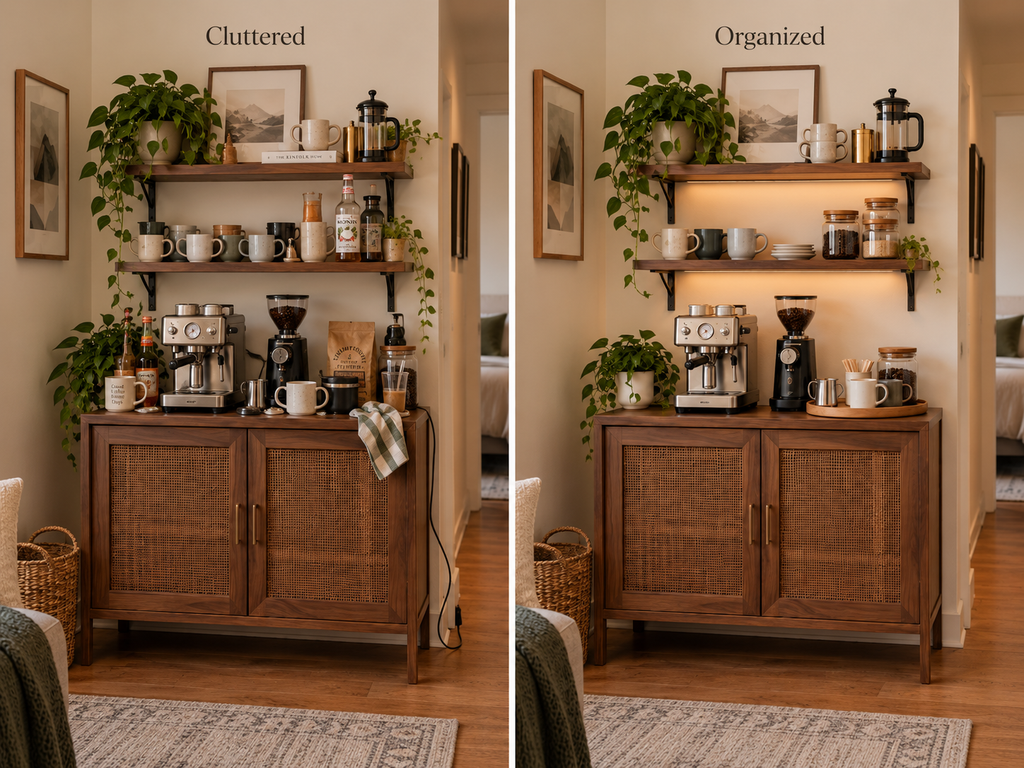
Maintaining a visually clean coffee station in a small space requires thoughtful organization rather than excessive decoration.
1. Focus on Natural Materials Instead of Wall Signage
Focus on a small number of complementary materials—such as wood worktops, fluted glass, matte metal hardware, and ceramic mugs—rather than filling the wall with decorative signs.
2. Use a Tray to Contain Small Items
Syrup bottles, sugar bowls, tamper mats, and small accessories can quickly make a small counter look cluttered. Grouping these items on a single wood, stone, or metal tray defines a clean working zone and keeps small tools organized.
3. Vertical Wall Organization & Lighting
- Wall Rails & Hooks: Installing a slim wall rail with S-hooks or a wooden mug rack above the station frees up counter space while keeping everyday cups within reach.
- Warm Ambient Lighting: Under-shelf LED strip lighting or a small warm lamp adds subtle illumination, creating an inviting morning atmosphere.
Section 10: Buyer’s Comparison Matrix
Use this matrix to evaluate coffee bar furniture types based on your space constraints and equipment setup:
| Furniture Type | Best For | Typical Size | Stability | Storage | Good for Renters? |
|---|---|---|---|---|---|
| Coffee Bar Cabinet | Clutter concealment & permanent kitchens | Width: 30″–55″ Depth: 15″–24″ | Usually high if the cabinet has a wide base and sturdy construction | High (enclosed shelves & drawers) | Moderate (heavy to move) |
| Rolling Coffee Cart | Renters & flexible layouts | Width: 24″–40″ Depth: 15″–20″ | Moderate to High (requires locking wheels & sturdy frame) | Moderate (open shelves & shallow drawers) | High (mobile & adaptable) |
| Corner Coffee Bar Cabinet | Unused room corners | Wall Depth: 28″–36″ Height: 35″–70″ | Varies by design; tall units may require wall anchoring | Moderate to High (corner depth utilization) | Moderate |
| Multi-Tier Baker’s Rack | Limited floor space & high gear count | Width: 24″–36″ Depth: 15″–18″ Height: 65″–72″ | Moderate; tall units should use an anti-tip wall anchor | High (vertical multi-shelf storage) | High (freestanding; anti-tip wall strap recommended) |
Conclusion
By measuring carefully, choosing sturdy furniture, checking your power needs, and arranging everything around how you actually make coffee, you can create a compact station that is easy to use every day.