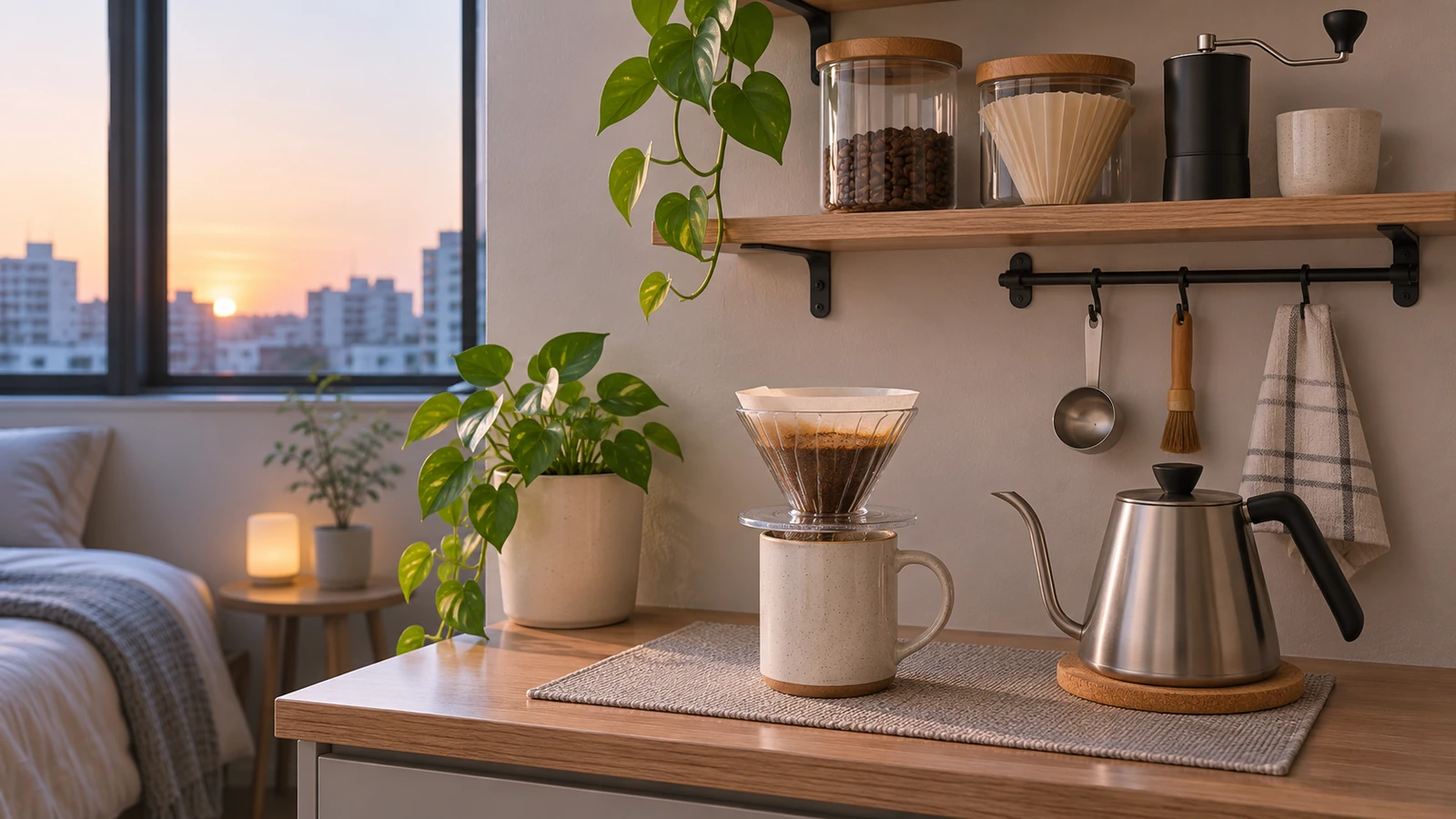
Quiet Coffee Setups for Apartments: Early-Morning Brewing Choices
Choose a Morning Coffee Routine That Fits Your Home
An early coffee can be worth making, even while someone else is asleep. Before shopping for a supposedly quiet machine, notice which step in your routine might disturb them and ask whether that task can happen at a different time.
Grinding, heating water, making the drink, setting down mugs and cleaning up can all create sound. Moving one task outside household quiet hours removes that particular morning event, but it does not make the rest of the routine silent. The useful choice depends on the drink you want, the effort you can manage and the room available on your counter.
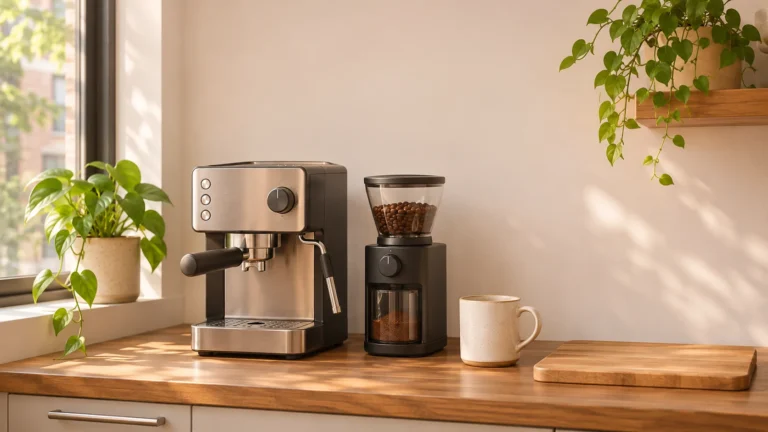
If repeated setup takes time, leaving a small, safe station ready may be worth giving up some counter space. A kitchen that needs the same surface for other tasks may call for a different compromise.
Use the checklist below to identify your own sound-producing steps, then follow four questions to decide what to move, keep or change.
Find the Sound-Producing Steps in Your Routine
To reduce morning disturbance, start by auditing where sound occurs in your current coffee routine. Coffee preparation can involve up to five distinct physical stages. Depending on your brewing method—for example, if you use pre-ground coffee or advance-made cold brew—some of these stages may be shifted earlier or omitted entirely:
- Bean Dosing and Grinding: Powered burr grinders, such as the Baratza Encore ESP, rely on an electric motor to drive burrs (Baratza Encore ESP Product Page). Operating a powered grinder introduces motor sound and the mechanical shearing of coffee beans. Manual hand grinders, such as the 1Zpresso K-Ultra, eliminate the electric motor by utilizing a hand crank turned by the user (1Zpresso K-Ultra User Manual). While hand grinding removes electric motor pitch, the physical shearing of beans and mechanical rotation remain audible at close range.
- Water Heating (Conditional): Methods requiring hot water introduce heating sound. Electric kettles produce water movement, thermal expansion, and mechanical or electronic shut-off clicks, while stove-top kettles generate steam flow and lid movement. Filling a kettle and setting a vessel onto a counter also create surface contact sounds. (Advance-made cold brew requires no morning water heating.)
- Brewing and Fluid Extraction: Different extraction methods involve distinct physical events:
- Espresso Machines: The Breville Barista Express BES870 ANZ–M21 manual describes normal pumping during steaming (printed p. 15), automatic water release into the drip tray after steaming (p. 16), and pumping or pulsing during extraction or steaming in its troubleshooting section (p. 31). These are model-specific operations, not measured household sound levels (Breville BES870 ANZ–M21 Instruction Book).
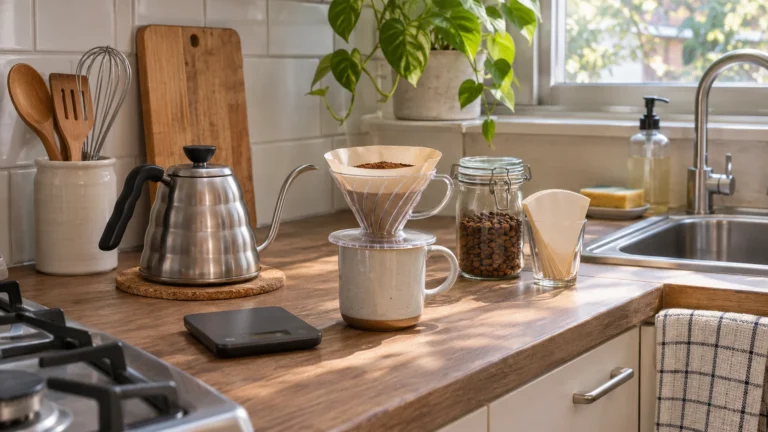
- Manual Filter Brewers: Manual pour-over drippers like the Hario V60 (Hario UK Basic V60 Brew Guide) and full-immersion brewers like the French Press (National Coffee Association French Press Guide) contain no electric pumps or motors. Liquid trickling and plunger movement generate localized fluid sounds.
- AeroPress Original: The AeroPress Original uses manual pressure over a compatible sturdy vessel (AeroPress How to Use; AeroPress FAQ). Depending on the method, an air-release hiss or a grounds-disposal pop may occur; neither is an acoustic ranking.
- Hardware Handling and Counter Contact: Contact between hard materials can create noticeable sounds in some kitchens. Examples include locking a portafilter into a group head, setting down carafes or mugs, tapping a milk jug, and opening or closing cabinet doors.
- Cleanup and Waste Management: Post-brew cleanup creates late-stage sound events. Knocking spent espresso pucks into a knock-box, popping AeroPress coffee grounds into a bin, rinsing filter baskets under running tap water, and placing washed items in a sink all generate impact and splashing sounds.
Your Morning Sound-Event Checklist
Fill in your own household timing, who might notice a sound, what you could move or omit, what may remain, and which appliance instructions need checking. Skip rows your routine does not use. These rows are blank for your observations; they are not a record of any tested household.
Notes entered here are not saved. Copy them before leaving this page.

Text version of the quiet-hours task map
- Before quiet hours: Optional grinding, measuring coffee and setting out tools may move earlier.
- During quiet hours: Choose the drink, heat water only if needed, brew or press as required, and account for remaining mug or counter sounds.
- After quiet hours: Where appropriate, optional washing, grounds disposal or deeper cleanup could wait until later. Follow the exact equipment hygiene and handling instructions.
Four Questions to Choose Your Coffee Routine
To construct a quiet-hours coffee routine tailored to your physical capabilities, kitchen space, and beverage preferences, follow this four-question decision path in exact sequence:
- Q1: Can coffee grinding be moved outside morning quiet hours?
- Yes: Pre-grind whole beans the evening before OR use pre-ground coffee. Skip Q2 and proceed to Q3.
- No: Proceed to Q2 for fresh morning grinding options.
- Q2: Is hand grinding physically feasible for the resident, dose, and grind fineness?
- Yes: Use a manual hand grinder. No electric motor; grip strength and manual turning are required. Proceed to Q3.
- No: Accept powered electric grinding during quiet hours OR adopt a non-grinding format such as pre-ground coffee or cold brew. Proceed to Q3.
- Q3: Which drink is required during quiet hours—filter coffee, espresso, or cold coffee?
- Filter coffee: Manual brewer: AeroPress Original, V60 pour-over, or French press. Proceed to Q4.
- Espresso: Espresso machine, such as Breville BES870 ANZ–M21. Proceed to Q4.
- Cold coffee: Advance-made cold brew. Proceed to Q4.
- Q4: Can the chosen setup be operated safely and stored without extra morning clatter?
- Requirement: Check the selected equipment's exact placement, hot-liquid and handling instructions.

Detailed Decision Logic
-
Question 1 (Grinding Timing): Can coffee grinding be moved outside morning quiet hours?
- If YES: Pre-grind whole beans the prior evening using your electric or manual grinder, or purchase store-bought pre-ground coffee (AeroPress Original Guide; National Coffee Association French Press Guide). Rescheduling grinding removes the motor sound of powered grinders from morning hours. When Question 1 is answered YES, Question 2 is skipped entirely, and you proceed directly to Question 3.
- If NO: If your preference requires grinding whole beans immediately before brewing during quiet hours, proceed to Question 2.
-
Question 2 (Hand-Grinding Feasibility): Is hand grinding physically feasible for your grip strength, hand dexterity, required coffee dose, and grind fineness?
- If YES: A manual hand grinder like the 1Zpresso K-Ultra can be used without an electric motor (1Zpresso K-Ultra User Manual). For grinder selection beyond this timing decision, see our compact-home grinder guide.
- If NO: If hand grinding causes joint discomfort, wrist strain, or physical fatigue, you have two practical choices: accept powered electric grinding sound during morning hours, or revise your fresh-grind requirement by adopting store-bought pre-ground coffee or advance-made cold brew. Proceed to Question 3.
-
Question 3 (Beverage Selection): Which beverage type do you require during quiet hours?
- Filter Coffee: Consider a manual brewer such as the AeroPress Original (AeroPress Original Guide), Hario V60 (Hario UK Basic V60 Brew Guide), or French press (National Coffee Association French Press Guide). For the pour-over steps rather than quiet-hours planning, see our small-kitchen pour-over guide.
- Espresso-Based Coffee: Use your espresso machine (such as the Breville Barista Express BES870 ANZ–M21 edition), accounting for normal internal pump, steam, and portafilter handling sounds (Breville Barista Express BES870 ANZ–M21 Instruction Book, printed pp. 15–16, 31). Milk steaming remains optional based on personal preference.
- Cold Coffee: Select advance-made cold brew prepared ahead of time (National Coffee Association Cold Brew Guide). Proceed to Question 4.
-
Question 4 (Safety and Storage Check): Can the chosen setup be operated safely on a surface compatible with its manufacturer’s instructions, with enough room for handling and cleanup? Verify vessel stability for the specific AeroPress model and device-specific electrical or timer conditions where applicable.
Compare Six Brewing Workflows
The matrix below classifies six primary coffee brewing pathways by remaining morning sound events, tasks movable to earlier hours, physical and safety constraints, and primary source boundaries. This table serves as an analytical classification tool, not an acoustic ranking.
| Pathway / Brewing Route | Remaining Morning Sound Events | Tasks Movable Earlier | Physical, Hot-Water & Safety Constraints | Source Status & Operational Limits |
|---|---|---|---|---|
| 1. Pre-Ground + V60 Pour-Over | Water heating, pouring stream, cup contact, sink rinsing. | Grinding eliminated in morning; bean dosing moved to prior evening. | Requires steady hand pouring of hot water; handling kettle near steam. | Grounded in Hario UK V60 Guide. Dripper has no motor; water heating sound remains. |
| 2. Pre-Ground + AeroPress Original | Possible water heating, plunger movement, an air-release hiss in some methods, grounds disposal, mug contact. | Grinding task omitted in the morning; dose measuring and filter setup may move earlier. | Requires manual pressing over a sturdy, stable vessel suitable for hot liquids and the exact AeroPress model. | AeroPress How to Use and FAQ support this manual route; no inevitable sound or quietness ranking. |
| 3. Pre-Ground + French Press | Water heating, steeping wait, plunger movement, vessel contact, sink wash. | Grinding eliminated in morning; coffee dosing and carafe placement prepared earlier. | Requires stable handling of the carafe and plunger when preparing and serving hot coffee. Follow the specific French press’s instructions, particularly for glass vessels. | Grounded in NCA French Press Guide. Full-immersion manual path; no electric pumps or motors. |
| 4. Hand Grinder + Manual Brewer | Bean crunching, manual crank turning, water heating, brewing contact, sink cleanup. | Station setup, bean weighing, and water filling moved to prior evening. | Imposes manual physical effort; requires grip strength and wrist rotation. | Grounded in 1Zpresso K-Ultra Manual & brewer guides. Hand crank eliminates motor pitch; bean shearing sound remains. |
| 5. Powered Grinder + BES870 Espresso | Powered grinding if performed in the morning; possible pump, steam, purge-related fluid movement and portafilter handling sounds. | Grinding can move earlier if the reader accepts the taste/control tradeoff. | The BES870 ANZ–M21 manual specifies a level, clean, dry bench and states the machine is not intended for an external timer or separate remote-control system. | Breville BES870 ANZ–M21 Instruction Book, printed pp. 2–3, 15–16, 31; not a rule for other models or markets. |
| 6. Advance-Made Cold Brew | Refrigerator door opening, liquid pouring, carafe contact, optional reheating. | Grinding, steeping, and filtering completed in advance (timing depends on method). | Requires refrigerator shelf space and advance planning; batch filtration requires steady handling. | Grounded in NCA Cold Brew Guide. Removes morning water heating and brewing; steeping time varies by method. |
1. Pre-Ground + V60 Pour-Over
- Remaining Morning Sound Events
- Water heating, pouring stream, cup contact, sink rinsing.
- Tasks Movable Earlier
- Grinding eliminated in morning; bean dosing moved to prior evening.
- Physical, Hot-Water & Safety Constraints
- Requires steady hand pouring of hot water; handling kettle near steam.
- Source Status & Operational Limits
- Grounded in Hario UK V60 Guide. Dripper has no motor; water heating sound remains.
2. Pre-Ground + AeroPress Original
- Remaining Morning Sound Events
- Possible water heating, plunger movement, an air-release hiss in some methods, grounds disposal, mug contact.
- Tasks Movable Earlier
- Grinding task omitted in the morning; dose measuring and filter setup may move earlier.
- Physical, Hot-Water & Safety Constraints
- Requires manual pressing over a sturdy, stable vessel suitable for hot liquids and the exact AeroPress model.
- Source Status & Operational Limits
- AeroPress How to Use and FAQ support this manual route; no inevitable sound or quietness ranking.
3. Pre-Ground + French Press
- Remaining Morning Sound Events
- Water heating, steeping wait, plunger movement, vessel contact, sink wash.
- Tasks Movable Earlier
- Grinding eliminated in morning; coffee dosing and carafe placement prepared earlier.
- Physical, Hot-Water & Safety Constraints
- Requires stable handling of the carafe and plunger when preparing and serving hot coffee. Follow the specific French press’s instructions, particularly for glass vessels.
- Source Status & Operational Limits
- Grounded in NCA French Press Guide. Full-immersion manual path; no electric pumps or motors.
4. Hand Grinder + Manual Brewer
- Remaining Morning Sound Events
- Bean crunching, manual crank turning, water heating, brewing contact, sink cleanup.
- Tasks Movable Earlier
- Station setup, bean weighing, and water filling moved to prior evening.
- Physical, Hot-Water & Safety Constraints
- Imposes manual physical effort; requires grip strength and wrist rotation.
- Source Status & Operational Limits
- Grounded in 1Zpresso K-Ultra Manual & brewer guides. Hand crank eliminates motor pitch; bean shearing sound remains.
5. Powered Grinder + BES870 Espresso
- Remaining Morning Sound Events
- Powered grinding if performed in the morning; possible pump, steam, purge-related fluid movement and portafilter handling sounds.
- Tasks Movable Earlier
- Grinding can move earlier if the reader accepts the taste/control tradeoff.
- Physical, Hot-Water & Safety Constraints
- The BES870 ANZ–M21 manual specifies a level, clean, dry bench and states the machine is not intended for an external timer or separate remote-control system.
- Source Status & Operational Limits
- Breville BES870 ANZ–M21 Instruction Book, printed pp. 2–3, 15–16, 31; not a rule for other models or markets.
6. Advance-Made Cold Brew
- Remaining Morning Sound Events
- Refrigerator door opening, liquid pouring, carafe contact, optional reheating.
- Tasks Movable Earlier
- Grinding, steeping, and filtering completed in advance (timing depends on method).
- Physical, Hot-Water & Safety Constraints
- Requires refrigerator shelf space and advance planning; batch filtration requires steady handling.
- Source Status & Operational Limits
- Grounded in NCA Cold Brew Guide. Removes morning water heating and brewing; steeping time varies by method.
Three Apartment Morning Scenarios
To illustrate how the decision framework functions across different living arrangements, consider three hypothetical apartment scenarios. These scenarios are conceptual planning tools, not measured acoustic tests.
Scenario 1: Early Riser in a Studio Apartment with a Sleeping Partner
- Household Context: A solo early riser lives in an open studio apartment where the kitchen counter is located ten feet from the bed. The resident needs a hot cup of filter coffee at 5:30 AM without waking a sleeping partner.
- Applied Decision Path:
- Q1 (Grinding Shift): YES. The resident pre-grinds whole coffee beans the previous evening outside quiet hours using an electric grinder, storing the single dose in a sealed container.
- Q2 (Hand Grind Feasibility): SKIPPED. Because Q1 was answered YES, Question 2 is bypassed entirely.
- Q3 (Beverage Choice): Hot filter coffee via the AeroPress Original.
- Q4 (Safety & Setup Check): In the morning, the resident heats water in an electric kettle, sets the AeroPress Original over a sturdy ceramic mug on a level bench, pours hot water, and applies gentle downward pressure (AeroPress Original Guide).
- Outcome & Residual Uncertainty: Moving grinding outside quiet hours removes that one morning motor-grinding event. Other sounds may include kettle operation, pouring, pressing, mug or filter handling, cabinet doors and cleanup. This hypothetical scenario has not been tested for household disturbance or sleep outcomes.
Scenario 2: Shared Multi-Tenant Apartment with Varied Work Schedules
- Household Context: A tenant lives in a shared three-bedroom apartment with thin interior walls. Housemates work night shifts and sleep during early morning hours. The tenant prefers fresh-ground filter coffee at 6:30 AM.
- Applied Decision Path:
- Q1 (Grinding Shift): NO. The resident declines pre-grinding due to a strong preference for grinding immediately before brewing.
- Q2 (Hand Grind Feasibility): YES. The resident possesses full hand dexterity and comfortably operates a 1Zpresso K-Ultra manual grinder (1Zpresso K-Ultra User Manual).
- Q3 (Beverage Choice): Hot pour-over filter coffee using a Hario V60 dripper (Hario UK Basic V60 Brew Guide).
- Q4 (Safety & Setup Check): The resident manually turns the 1Zpresso K-Ultra to grind coffee, places the V60 dripper onto a mug on a level bench, and pours hot water steadily from a kettle.
- Outcome & Residual Uncertainty: Using a manual hand grinder eliminates electric motor sound from the apartment. However, the physical shearing of beans inside the burr chamber and handling the metal grinder body still generate localized sound.
Scenario 3: Home Worker Seeking Morning Espresso
- Household Context: A resident living in a multi-family apartment building wants an espresso at 7:00 AM before starting remote work, using a Breville Barista Express (BES870 ANZ–M21 edition).
- Applied Decision Path:
- Q1 (Grinding Shift): YES. To minimize morning noise, the resident pre-grinds espresso doses the evening before into a dosing cup and stores them, accepting the subjective taste tradeoff. Because Q1 is answered YES, Question 2 is SKIPPED.
- Q2 (Hand Grind Feasibility): SKIPPED. (Bypassed after Q1 YES).
- Q3 (Beverage Choice): Espresso-based coffee via an electric espresso machine (milk steaming is optional).
- Q4 (Safety & Setup Check): The resident places the BES870 ANZ–M21 on the level, clean, dry bench specified by its manual and follows that edition’s statement that the machine is not intended to be operated by means of an external timer or separate remote-control system (Breville BES870 ANZ–M21 Manual, printed pp. 2–3).
- Outcome & Residual Uncertainty: Moving grinding earlier omits the morning grinder-motor event, but the BES870 pump may still be audible during espresso extraction. Steam-related pumping is relevant if the resident makes a milk drink; automatic water release after steaming, portafilter handling and cleanup may create additional sounds. No apartment noise or sleep outcome was measured (Breville BES870 ANZ–M21 Manual, printed pp. 15–16, 31).
Keep the Equipment Safe and Accessible
Achieving a quiet coffee routine must never compromise appliance safety, physical well-being, or manufacturer operating instructions.
Stable Placement
- Exact-model placement: The Breville BES870 ANZ–M21 instruction book specifies a level, clean, dry bench for that model (printed p. 2). For other coffee makers, kettles and pressure brewers, check their own manuals for stable placement and safe hot-liquid handling; do not extend this BES870 requirement to every appliance.
- Unverified padding: The accepted sources do not establish that towels, foam or added mats reduce apartment disturbance. Do not add anything that interferes with the exact appliance’s stated stability or ventilation requirements. Neither the effectiveness nor a universal fire hazard of every mat has been established.
- Cabinet and enclosure instructions: The Breville BES870 ANZ–M21 manual says not to operate that Barista Express inside a cabinet (printed p. 3). Check the exact manual for enclosure and ventilation instructions before operating any other appliance in a shelf or cabinet.
- External timers: The Breville BES870 ANZ–M21 instruction book states the machine is not intended to be operated by means of an external timer or separate remote-control system (manufacturer manual, printed p. 3). For other models and regions, consult their own manuals rather than assuming the same instruction applies.
Vessel and Pressing Safety
- Sturdy Vessel Rule for AeroPress: Official AeroPress instructions mandate pressing only over a sturdy mug or carafe rated for hot liquids (AeroPress Original Guide & AeroPress FAQ). Official AeroPress FAQ notes that sturdy glass carafes rated for hot liquids are compatible with the AeroPress Original (though glass is explicitly prohibited for the Original XL and Clear XL models). Never press over delicate, thin-walled, or unrated glass vessels, as downward pressing force can cause glass breakage and hot liquid spills.
- AeroPress method-specific sounds: Some manufacturer-described methods may produce an air-release hiss during pressing (AeroPress How to Use). Follow the instructions for the exact AeroPress model and method. The hiss does not establish a noise-reduction technique or justify an unverified pressing-stop instruction.
Physical Effort and Alternatives
- Evaluating Manual Effort: Hand-grinding coffee beans and manually pressing immersion brewers require grip strength, wrist stability, and upper-body leverage.
- Accessible Workflow Branches: Residents experiencing joint pain, arthritis, muscular weakness, or morning fatigue should not feel pressured to use manual hand grinders. Pre-ground coffee doses (AeroPress Original Guide; NCA French Press Guide) and advance-made cold brew (NCA Cold Brew Guide) represent primary, accessible workflow branches that eliminate manual grinding effort while avoiding morning motor noise.
Try a One-Week Household Check
Rather than assuming your routine is silent, evaluate your setup using a one-week qualitative trial log. Gather feedback directly from your household to refine your workflow:
Phase 1 (Days 1–2): Baseline Workflow Audit
- Complete the Sound-Event Audit Checklist in Section 2 for your current routine. Identify which phase creates the primary disturbance (e.g., morning electric grinding, portafilter handling, kettle shut-off).
Phase 2 (Days 3–4): Implement One Rescheduling Shift
- Select one targeted change based on the Decision Path in Section 3. For example, pre-grind your coffee outside quiet hours or switch to an AeroPress Original with pre-ground coffee over a sturdy ceramic mug.
Phase 3 (Days 5–6): Household Feedback Check
- Ask sleeping partners or housemates whether early-morning brewing sounds were noticeable. Identify any remaining friction points, such as cabinet doors clattering or spoons striking mugs.
Phase 4 (Day 7): Workflow Review and Adjustment
- Review your trial results using the qualitative evaluation log below:
| Trial Assessment Metric | Reader Observation & Household Feedback | Workflow Adjustment |
|---|---|---|
| Primary Nuisance Step | Was the most bothersome step successfully moved or softened? | If morning grinding remains disruptive, reschedule grinding outside quiet hours. |
| Household Sleep Impact | Did housemates report being woken by morning coffee prep? | If water heating or cup contact woke sleepers, adjust kettle placement or handle cups deliberately. |
| Physical Effort & Comfort | Was manual grinding or pressing physically comfortable? | If hand grinding caused wrist strain, switch to pre-ground coffee or cold brew. |
| Beverage Satisfaction | Did the adjusted routine produce an enjoyable cup of coffee? | Fine-tune coffee dose or steep time within your chosen brewing method. |
Primary Nuisance Step
- Reader Observation & Household Feedback
- Was the most bothersome step successfully moved or softened?
- Workflow Adjustment
- If morning grinding remains disruptive, reschedule grinding outside quiet hours.
Household Sleep Impact
- Reader Observation & Household Feedback
- Did housemates report being woken by morning coffee prep?
- Workflow Adjustment
- If water heating or cup contact woke sleepers, adjust kettle placement or handle cups deliberately.
Physical Effort & Comfort
- Reader Observation & Household Feedback
- Was manual grinding or pressing physically comfortable?
- Workflow Adjustment
- If hand grinding caused wrist strain, switch to pre-ground coffee or cold brew.
Beverage Satisfaction
- Reader Observation & Household Feedback
- Did the adjusted routine produce an enjoyable cup of coffee?
- Workflow Adjustment
- Fine-tune coffee dose or steep time within your chosen brewing method.
Keep the Routine That Works for Your Home
A quiet-hours coffee routine does not have to depend on a product marketed as “silent” or an untested padding modification. Start by identifying the preparation steps that matter in your household, then choose which tasks to move outside quiet hours and which sounds may remain.
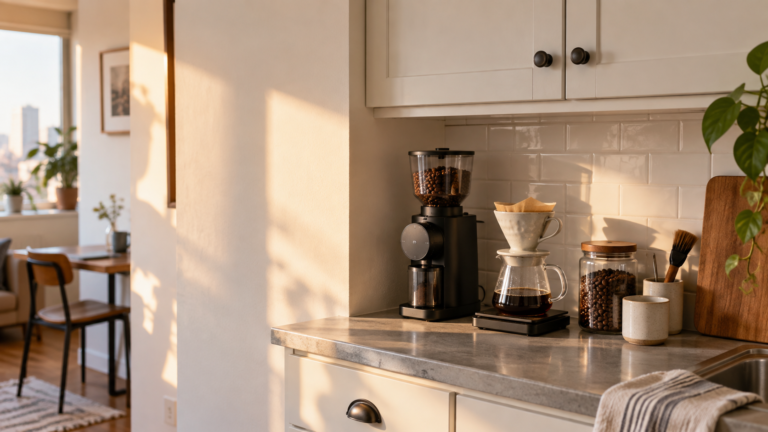
Our editorial approach aligns with a key practical compromise: if setting up and stowing coffee gear every morning takes time and creates counter clatter, keeping a safe, compact setup assembled on a clear counter can be worth giving up a portion of working space. This trade-off balances daily convenience against surface availability.
By rescheduling noisy grinding tasks outside quiet hours, selecting manual brewing pathways where physically comfortable, utilizing pre-ground coffee or cold brew when accessibility requires it, and maintaining strict compliance with manufacturer safety manuals, you can establish a morning coffee routine that fits seamlessly into your daily life—delivering a satisfying cup while respecting the peace of your home.